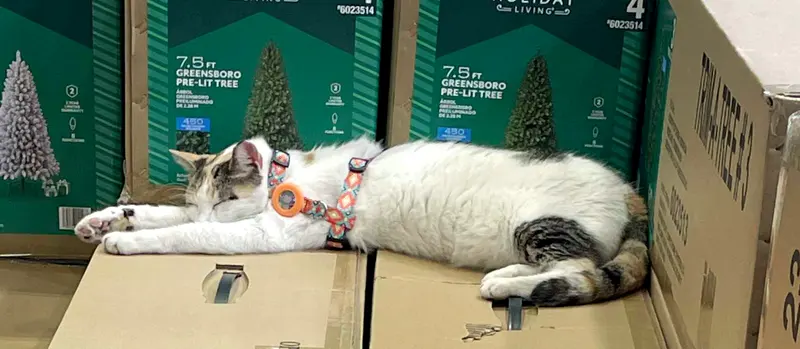
It is easy to see the appeal: a Bluetooth tag costs far less than a GPS pet tracker and needs no subscription. But Apple says, in its January 2026 announcement of the new AirTag, that AirTag is designed exclusively for tracking objects — not people or pets — and Google’s Find Hub help pages say tracker tags shouldn’t be used to track pets. (Samsung is the exception among the big three: its UK Samsung Find support page mentions using tags for family pets.) Whatever the maker says, Bluetooth tags all share the same limits.
How a Bluetooth tag finds things
A Bluetooth tracker has no GPS and no mobile connection. It sends out a short-range Bluetooth signal, and its location is only updated when a phone on the same network passes close enough to pick it up and report it. In a busy town that can happen often; across fields, woodland or at night it may not happen at all. That is fine for a bag left on a train, but a frightened dog or a roaming cat moves quickly and often goes where there are no people.
The anti-stalking protections built into the networks can also work against you: phones may alert nearby people that an unknown tracker is moving with them, and an AirTag that has been separated from its owner for a while makes a sound when it is moved. Samsung also warns that a tag on a pet’s collar could come off and become a swallowing hazard.
How a GPS pet tracker is different
A GPS pet tracker works out its own position by satellite and sends it over a built-in mobile (SIM) connection, so you can see where your pet is in close to real time wherever there is mobile coverage. Most add things a Bluetooth tag can’t do:
- Live tracking — the trackers we list update as often as every few seconds in live mode.
- Virtual fences or safe zones that alert you when your pet leaves home.
- Activity monitoring — steps, rest and, on some, sleep.
The trade-offs
- Subscriptions. Because they use mobile data, most need a plan from the maker. In our list, Tractive, Weenect, PAJ and Life360 Pet GPS require one; PitPat says no subscription is needed for tracking.
- Charging. Stated battery life ranges from a few days (small cat trackers) to several weeks (larger dog trackers), and depends on how often you use live tracking.
- Size and weight. Cat trackers are the smallest — Tractive’s CAT 6 Mini is 32 g including its safety-release collar, and Weenect’s XS is 27 g. Check the maker’s weight guidance for your pet.
- Coverage. They only report a live position where there is a mobile signal.
Which to look at
Compare them on our GPS pet trackers page. Look at the subscription terms, the stated battery life with and without power-saving features, the water rating, and whether there is a version sized for your pet.
Sources
- Apple Newsroom (UK), 26 January 2026 — new AirTag (AirTag is designed for objects, not people or pets)
- Tractive — tracker comparison
- Weenect UK — GPS dog tracker
- PitPat — Dog GPS Tracker and FAQ
- PAJ GPS UK — PET Finder 4G Mini
- Life360 UK — Pet GPS
- GOV.UK — Get your dog or cat microchipped
- Android Help — tracker tags (not for pets)
- Samsung UK Support — features of the Samsung Find app
- Apple Support — alerts about AirTag and other items (sounds when separated)
- Samsung Global Newsroom — Galaxy SmartTag3 (safety notes)
This guide is general information, not legal or safety advice for your situation. If you are in danger, call 999.