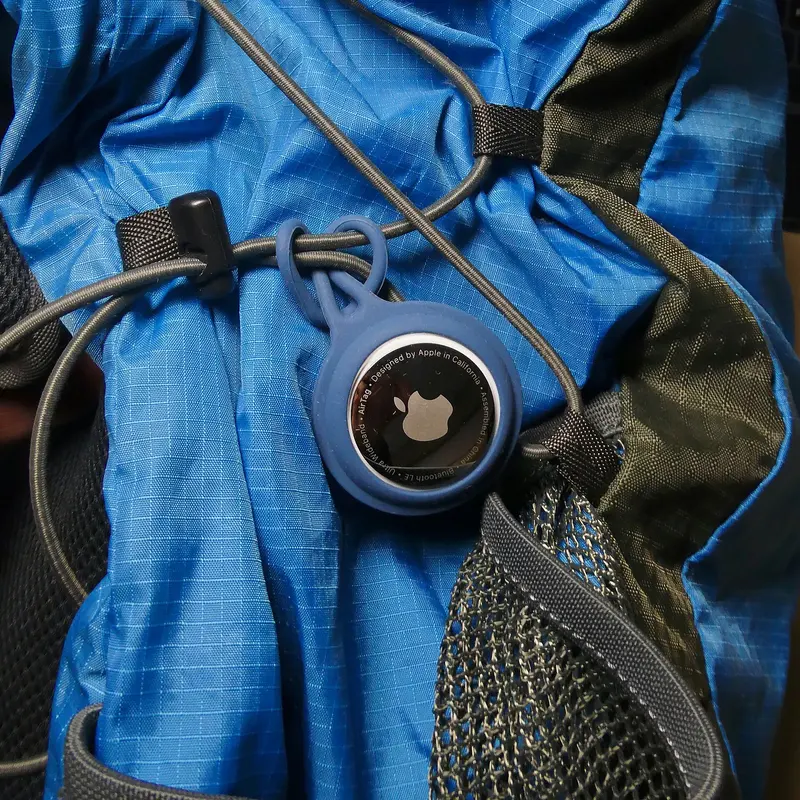
A tracker in a suitcase won’t stop it going astray, but it can tell you — and the airline — where it ended up.
Are trackers allowed in hold and hand luggage?
IATA, the airline industry body, says in its 2026 passenger guidance on lithium batteries: “Bag tags and GPS tracking devices are not restricted.” It counts devices attached to baggage or belongings, with or without GSM, Bluetooth, RFID or Wi-Fi, as tracking devices.
The UK Civil Aviation Authority’s general rules for lithium-powered electronic devices also apply to luggage:
- Devices are allowed in both checked and cabin baggage, but the CAA says they should be carried in the cabin. If checked, they must be fully switched off when the battery is above 0.3 g of lithium metal or 2.7 Wh.
- Spare lithium batteries (such as spare CR2032s) must go in your cabin bag, individually protected — not in checked luggage.
- If your cabin bag is taken to the hold at the gate, the CAA says to remove any batteries or lithium-powered devices.
- Airlines and security can refuse items, so always check with your airline before you fly.
Telling the airline where your bag is
Apple Find My — Share Item Location. On an iPhone with iOS 18.2 or later you can create a temporary link to a lost item’s location and share it with an airline. Apple says it works with more than 50 airlines, naming British Airways, Lufthansa, Singapore Airlines and Virgin Atlantic on its UK AirTag page; Aer Lingus was among the first partners announced in 2024. The link stops working when you’re reunited with the bag, after seven days, or when you turn it off. Apple doesn’t publish a full list of airlines, so ask yours.
Google Find Hub — share item location. Since March 2026, Android users can create a secure link to a lost item’s location and paste it into an airline’s app or website. Links expire after seven days. Google’s list of participating airlines includes Lufthansa, Swiss, Austrian, Turkish, Qantas and Qatar — but, when we checked, no UK-based airline.
How to fit a tracker in a suitcase
- Inside, not outside. A tracker hidden in an inside pocket or lining is less likely to be knocked off. A luggage-tag holder keeps it on the outside but visible.
- Thin is easier. A card tracker such as Tile Slim or Pebblebee Card 5 slips into a document pocket.
- Check the battery before you go — a low battery is the last thing you want on the way home.
- Turn on separation alerts (Notify When Left Behind on iPhone) so you know if you walk away without it.
- Mark it as lost if it goes missing: on Apple’s network, Lost Mode tells you when the bag is detected and lets anyone who finds it see your contact details.
Remember the limits
A Bluetooth tracker only updates when a phone on its network passes nearby, so a bag in a quiet storage area may not update for a while. And if you use a tracker to locate a bag that has been stolen, contact the police rather than trying to recover it yourself — Samsung, for example, advises not going to the location on the map.
Sources
- IATA — passengers travelling with lithium batteries (2026)
- CAA — safety advice on what to pack
- CAA — Pack Right. Safe Flight.
- Apple UK — AirTag (Share Item Location and airlines)
- Apple Support — Share Item Location
- Apple Newsroom (UK), November 2024 — sharing the location of lost items
- Apple iPhone User Guide — separation alerts
- Google, March 2026 — Find Hub and lost luggage
- Android — Find Hub baggage tracking and airlines
- Samsung UK Support — use SmartThings Find
This guide is general information, not legal or safety advice for your situation. If you are in danger, call 999.